A scroll saw is the quietest, most forgiving power saw a beginner can own — and the one that opens up an entirely different kind of woodworking. Where a circular saw rips boards and a jigsaw cuts curves in thick stock, a scroll saw cuts delicate, intricate shapes in thin wood: fretwork ornaments, puzzle pieces, wooden portraits, name plaques, Christmas decorations, and the lacy panels that make simple projects look far more skilled than they were difficult to make. If you have ever admired a wooden ornament with impossibly fine curls and thought “I could never make that,” a scroll saw is very likely the tool that made it — and it is far easier to learn than it looks.
The short answer, up front: for most beginners, a 16-inch variable-speed scroll saw with a tool-free blade change, a tilting table, and a dust blower — such as the WEN 3921 or the SKIL SS9503-00 — is the best buy. It costs a fraction of a bandsaw, sits on a benchtop, vibrates little enough to learn on, and handles everything from 1/8-inch Baltic birch plywood to 3/4-inch pine. The rest of this guide explains the two blade systems you must understand before buying, how to compare the beginner saws that actually matter, which blades to use for which wood, how to kill vibration, and how to cut your first fretwork piece without snapping a dozen blades.
If you already own a scroll saw and your blades keep breaking or your cuts wander, skip straight to the blade guide and the vibration section. In most cases the saw is not the problem — the blade type, the tension, or the way the saw sits on the bench is.
What Is a Scroll Saw, and How Is It Different from a Jigsaw?
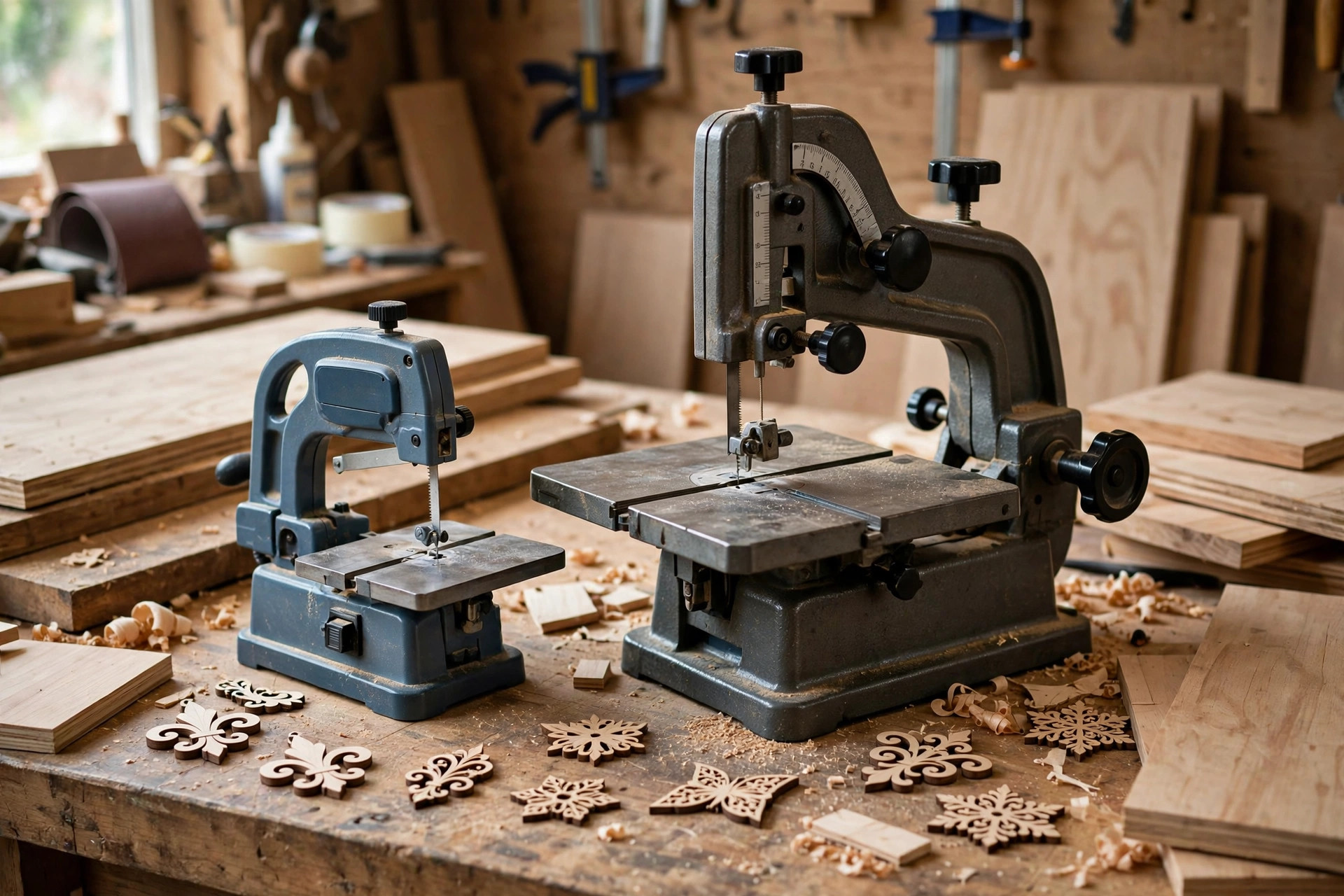
A scroll saw is a benchtop saw with a very thin, short blade that moves rapidly up and down through a small table. You feed the wood into the blade with both hands, steering it like a pencil, while the saw stays still. That is the fundamental difference from a jigsaw: with a jigsaw you move the saw through the wood, but with a scroll saw you move the wood through the saw. The result is far more control, especially on tight turns, because your hands are close to the blade and you can rotate the workpiece in any direction — including spinning it in a full circle for a closed shape.
A scroll saw also differs from a bandsaw in scale and purpose. A bandsaw is a large, powerful machine for resawing thick boards and cutting curves in heavy stock. A scroll saw is a precision instrument for thin stock and fine detail. It will not rip a 2×4, and it should not be asked to. What it will do, beautifully, is cut a 1/4-inch fretwork ornament with inside corners so sharp they look laser-cut, a puzzle with pieces that fit together with a satisfying click, and a wooden name sign with flowing script letters — all in an afternoon, in a small workshop, at a noise level your neighbours will barely notice.
This is also why the scroll saw is such a good beginner tool. The blade is thin and the cutting action is contained, the workpiece sits flat on a table rather than being held in the air, and the saw stops almost instantly when you lift your foot from the pedal or switch it off. Beginners who find a jigsaw intimidating often find a scroll saw calming: you sit down, you guide the wood slowly, and the saw does delicate work at a pace you fully control. If you already cut curves with a jigsaw, the scroll saw is the natural next step — compare the two in our guide to the best jigsaw for beginners to see where each tool earns its place.
The Beginner Gap: Why Most Scroll Saw Advice Fails Newcomers
Here is the gap almost no buying guide talks about: most scroll saw content is written for experienced fretworkers who already own a mid-range saw and argue about blade brands. Beginners get either a one-line “buy the cheapest one” recommendation or a wall of jargon about blade types, throat depths, and stroke lengths, with nothing in between. The result is predictable. A beginner buys the cheapest saw available, discovers it vibrates so badly the blade chatters, cannot figure out why blades snap, and concludes that fretwork is harder than it is. Or they buy an expensive professional saw, feel guilty about the price, and barely use it.
The truth is simpler. A beginner needs three things: a saw that runs smoothly enough that vibration does not ruin the cut, a blade system that is cheap and easy to change, and a setup routine that takes five minutes and works every time. Everything else — fancy dust collection, a foot pedal, a magnifying lamp — is a nice extra, not a requirement. This guide is built around those three things, because once you have them, the learning curve for fretwork is surprisingly gentle. Your first piece will have rough edges. Your third piece will look genuinely good. By your tenth, you will be giving them away as gifts and wondering why you waited so long.
Scroll Saw Types Explained: The Decisions That Actually Matter
Pin-end vs plain-end blades: the most important choice
Scroll saw blades come in two fixing systems, and this choice matters more than the brand of saw. Pin-end blades have a small metal pin at each end that hooks into the blade holders. They are easy to fit — you just hook them in — and they are the system found on the cheapest saws. Plain-end blades, also called pinless blades, are flat at the ends and clamp into the holders with a screw or lever. They take a few seconds longer to fit, but they are thinner, come in far more sizes and tooth patterns, and are the only sensible choice for real fretwork.
Why does thinness matter so much? Fretwork lives or dies on the blade’s ability to turn inside a tight curve and slip through a tiny drilled starter hole. A pin-end blade is typically too thick for fine fretwork: it cannot turn tightly, it leaves a wide kerf, and the pin itself will not fit through the small holes drilled for interior cuts. A plain-end blade as thin as a hair can turn on the spot, thread through a 1/16-inch hole, and cut a curve with a radius smaller than your little finger. If you are serious about fretwork at all, buy a saw that accepts plain-end blades — or, better, one that accepts both, so you can start with easy pin-end blades and graduate to plain-end blades without buying a new saw. The WEN 3922 and several other beginner saws accept both systems, which is one reason they are so popular with newcomers.
Throat depth: 16 inches is the beginner sweet spot
Throat depth is the distance from the blade to the back arm of the saw, and it decides how wide a piece you can cut. A 16-inch throat — the standard for beginner saws — lets you cut a piece up to 16 inches wide before the arm gets in the way, which covers ornaments, plaques, small boxes, and puzzle boards comfortably. Smaller 12-inch saws exist, but they feel cramped quickly, and the money saved is rarely worth the frustration. Larger 20- and 21-inch saws are professional tools for big fretwork panels; a beginner does not need one, and the extra weight and cost buy nothing you will use in your first year. Buy 16 inches, and spend the difference on blades and good plywood.
Variable speed: non-negotiable for a beginner
A scroll saw’s speed is measured in strokes per minute, and a good beginner saw offers a range of roughly 400 to 1,600 strokes per minute, adjustable with a dial. This matters because different materials and blade sizes need different speeds. Thin plywood and delicate fretwork need slow speeds, where you can steer carefully and the blade does not overheat. Thicker pine and faster rough cuts can run faster. A single-speed saw forces you to cut everything at one pace, which means either burning thin wood or crawling through thick wood. Every saw recommended in this guide has variable speed, and you should treat any saw without it as a deal-breaker, however cheap it is.
Table tilt, dust blower, and work light
Most beginner saws tilt the table up to 45 degrees for bevel and angled cuts, which is how you make compound-cut ornaments and angled puzzle edges. Check that the table locks firmly at 0 degrees — a table that drifts even slightly will make every cut bevelled without you noticing. A dust blower, usually a small flexible nozzle aimed at the blade, is more important than it sounds: fretwork cutting generates fine dust exactly where you need to see, on the pattern line. Without a blower you will be stopping every few seconds to blow dust away by hand, which breaks your rhythm and your accuracy. A work light is a pleasant bonus, but a cheap clip-on lamp does the same job, so do not pay a premium for one built in.
Beginner Scroll Saw Comparison: 5 Saws Worth Considering
The table below compares five saws beginners commonly consider. Prices vary by retailer and region, so treat the price band as a guide, not a quote. All five are 16-inch class benchtop saws, and the key column to study is the blade system — it decides what you can actually cut.
| Scroll saw | Throat / speed | Blade system | Tool-free change | Best for | Price band |
|---|---|---|---|---|---|
| WEN 3921 | 16 in, variable speed | Pin-end and plain-end | Yes | Best all-round beginner value | Low |
| WEN 3922 | 16 in, variable speed | Pin-end and plain-end | Yes | Easiest blade changes, dual system | Low-mid |
| SKIL SS9503-00 | 16 in, variable speed | Plain-end | Yes | Smooth running, modern design | Low-mid |
| Delta 40-694 | 20 in, variable speed | Plain-end | Yes | Larger throat, step-up pick | Mid |
| DeWalt DW788 | 20 in, variable speed | Plain-end | Yes | Professional smoothness, buy second | Mid-high |
WEN 3921: the honest beginner pick
The WEN 3921 is the pick most beginners should start with because it gets the fundamentals right at the lowest credible price. Its 16-inch throat covers everything a beginner will cut, its variable-speed dial runs slow enough for delicate plywood work, and — crucially — it accepts both pin-end and plain-end blades, so you can learn on easy pin-end blades and move to fine plain-end blades when you are ready. It also includes a dust blower, a tilting table, and a flexible work light. The honest trade-offs are vibration and refinement: the 3921 vibrates more than the SKIL or the DeWalt, and its blade tension lever feels less precise. Both problems are manageable — the vibration section below shows how — and for a first saw used a few times a month, the value is hard to beat.
WEN 3922: the easiest blade changes
The WEN 3922 is the 3921’s close sibling, and the difference is mostly in the blade-change system. Its tool-free blade clamps are quicker and more forgiving, which matters more than it sounds: beginners who find blade changes fiddly avoid changing blades, and then cut everything with one dull, wrong blade. The 3922 removes that excuse. It shares the dual blade system, the 16-inch throat, and the variable-speed range of the 3921, and it is the better choice if you know you will be switching between blade sizes often — for example, cutting a fretwork ornament that needs a fine blade for detail and a sturdier blade for the outer shape. Buy the 3922 if its price is close to the 3921 when you shop; buy the 3921 if the price gap is large, because the cutting performance is very similar.
SKIL SS9503-00: the smooth modern option
The SKIL SS9503-00 is the pick for beginners who care about smooth running and are willing to pay slightly more for it. It runs noticeably smoother than the WEN saws, with less vibration transmitted to the table, which shows up directly in cleaner cuts on thin plywood. Its plain-end-only blade system is a deliberate trade-off: you lose the easy pin-end starting option, but you gain a saw designed from the ground up for the fine blades real fretwork needs, with a clean blade-change mechanism and a well-designed dust blower. If you already know you want to do fretwork — not just general curve cutting — and you are happy to learn plain-end blade fitting from day one, the SKIL is arguably the best beginner saw on this list. Its only real drawback is that replacement parts and accessories are less widely stocked than WEN’s, so check availability in your region before buying.
Delta and DeWalt: buy these second, not first
The Delta 40-694 and the DeWalt DW788 are excellent saws, and both will last for years of regular use. The Delta offers a generous 20-inch throat for larger panels at a mid-range price, while the DeWalt is the fretworker’s classic: famously smooth, with a blade-change system and table that feel precise in a way cheaper saws do not. Neither is a bad first buy, but both cost substantially more than a beginner needs to spend before knowing whether fretwork is a lasting hobby or a passing interest. They make ideal second saws — or first saws for a beginner who is already committed to weekly fretwork. If you buy a WEN or SKIL now and upgrade in a year, you will appreciate the DeWalt far more than if you had started with it, because you will know exactly which refinements you are paying for.
Scroll Saw Blades: The Real Secret to Clean Fretwork
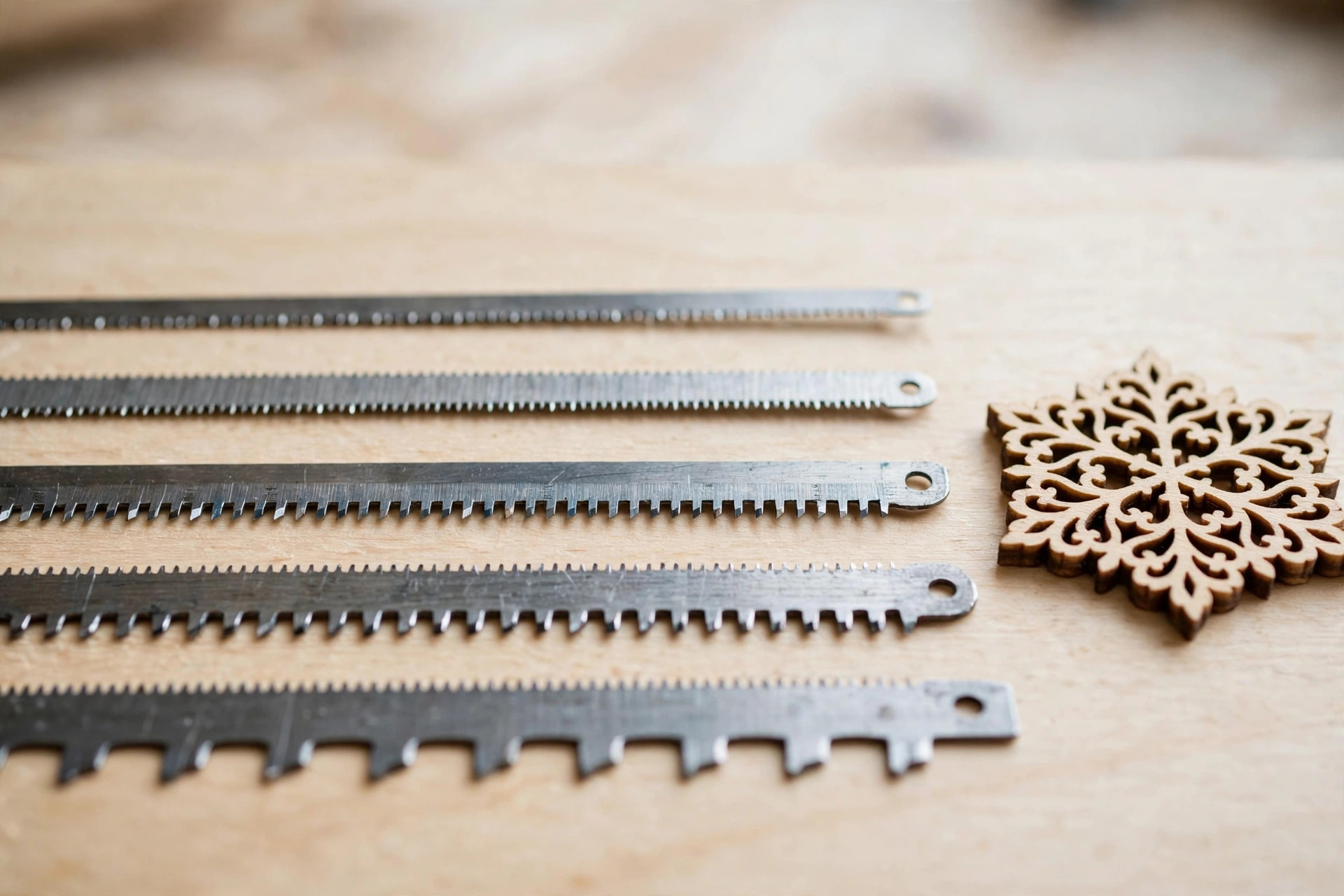
Here is the truth experienced fretworkers repeat to every beginner: the blade matters more than the saw. A mid-priced saw with the right sharp blade will out-cut an expensive saw with a dull, wrong blade every time. Blades are cheap — a dozen plain-end blades cost less than a takeaway meal — so there is no reason to stretch one blade across every material and thickness.
Scroll saw blades are described by size number, teeth per inch (TPI), and tooth pattern. Size numbers run roughly from #2/0 (the finest, hair-thin) up to #12 (thick and sturdy). Smaller numbers mean finer blades for thinner wood and tighter curves; larger numbers mean sturdier blades for thicker wood. TPI works like this: more teeth per inch means a smoother, slower cut; fewer, larger teeth mean a faster, rougher cut. Tooth patterns matter too: a standard skip-tooth blade has a gap after each tooth that clears sawdust well and is the best all-rounder for beginners. A reverse-tooth blade has a few teeth pointing downwards at the bottom, which cleans up the underside of the cut and reduces splintering on the bottom face — ideal for ornaments where both faces will be seen. A spiral blade cuts in every direction, which sounds convenient but is hard to control and best avoided until you are experienced.
Blade-type table: what to use where
| Blade | Best wood thickness | Best use | Cut quality | Beginner tip |
|---|---|---|---|---|
| #5 skip-tooth, plain-end | 1/8–1/4 in plywood | General fretwork, ornaments | Clean, versatile | Your default blade — buy a dozen |
| #3 skip-tooth, plain-end | 1/8 in plywood, veneer | Fine detail, tight curves | Very clean, delicate | Slow down; it snaps if forced |
| #7 skip-tooth, plain-end | 1/4–1/2 in pine, plywood | Outer shapes, thicker pieces | Clean, sturdy | Use for cutting out the blank first |
| #5 reverse-tooth, plain-end | 1/8–1/4 in plywood | Ornaments seen from both sides | Very clean underside | Reduces bottom-face splintering |
| #9 skip-tooth, plain-end | 1/2–3/4 in pine | Thicker projects, puzzles | Good, fast | Feed slowly to avoid wandering |
| Pin-end blade (medium) | 1/4–1/2 in pine, plywood | Learning, rough shapes | Moderate | Easiest to fit; graduate to plain-end soon |
A practical starter set is simple: a dozen #5 skip-tooth plain-end blades, half a dozen #3 skip-tooth blades for detail, and half a dozen #7 blades for thicker work. That set costs little and covers almost every beginner project. Change a blade as soon as it starts pushing hard, burning, or wandering — a dull blade is not just slow, it is the main reason beginners snap blades, because a dull blade tempts you to push harder and steer faster than the blade can cut.
Vibration Control: The Skill That Saves Your Cuts
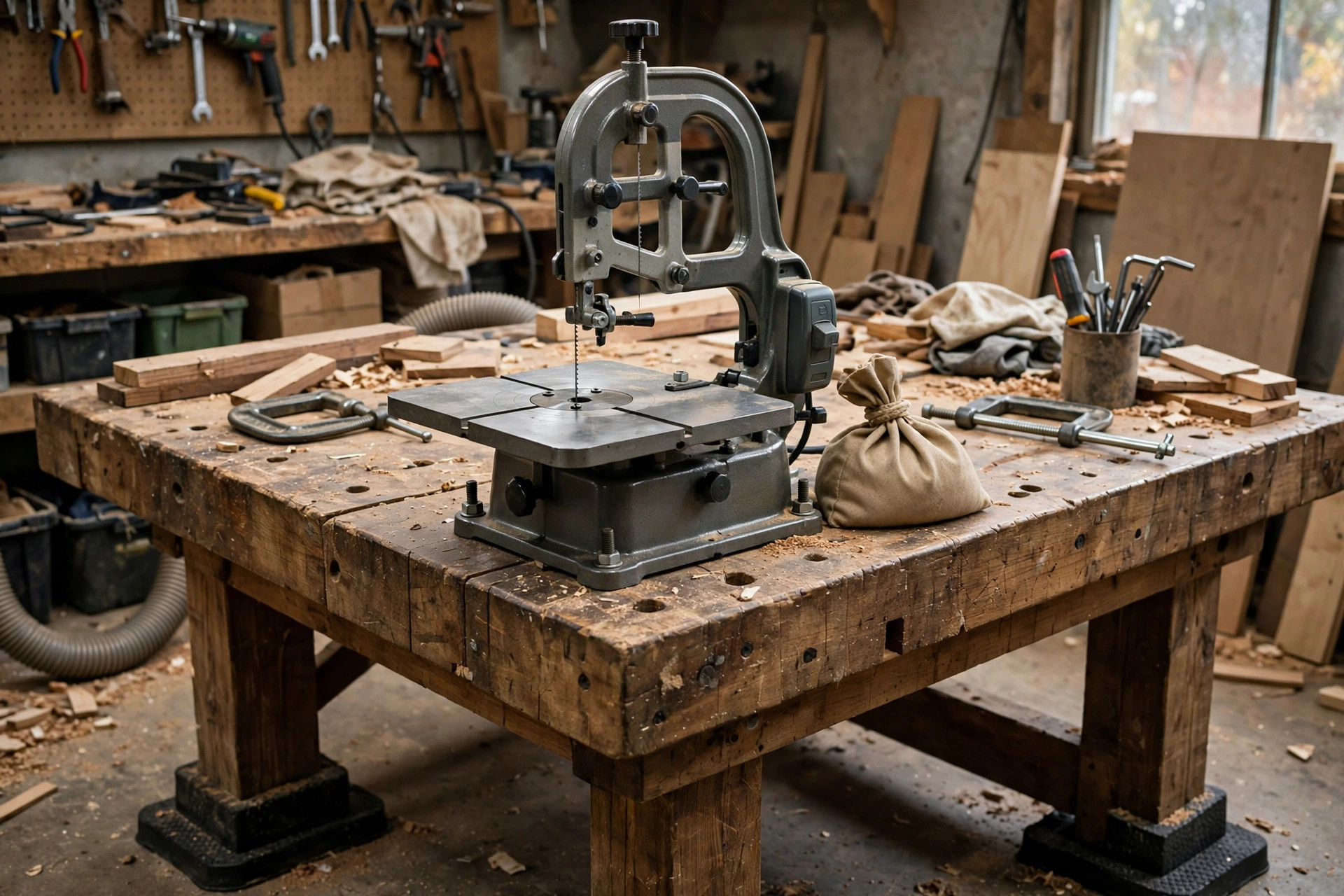
Vibration is the single biggest complaint about beginner scroll saws, and it is also the most fixable. A vibrating saw makes the blade chatter, which leaves a rough edge, makes tight turns hard to steer, and shakes the pattern line so you cannot follow it accurately. Before you blame the saw, work through these fixes in order — they solve the problem for most beginners without spending anything.
Bolt the saw down. A scroll saw sitting loose on a bench will walk, rattle, and amplify its own vibration. Bolt it through the bench or clamp it firmly at all four feet. If you cannot bolt through your bench, a plywood base board with the saw bolted to it, clamped to the bench, works almost as well and keeps the saw portable.
Put weight and rubber under it. A heavy, rigid bench vibrates less than a light folding table. If your bench is light, add a sandbag, a paving slab, or a bag of sand on the lower shelf to add mass. Rubber pads or an old rubber mat under the saw’s feet absorb vibration before it reaches the bench. Some woodworkers use a sheet of dense foam or a rubber anti-vibration mat sold for washing machines — both work well and cost little.
Check blade tension. A loose blade vibrates, wanders, and snaps. A correctly tensioned plain-end blade should give a clear, high “ping” when plucked, like a guitar string. Most saws have a tension lever or knob at the back: tighten until the blade pings cleanly, then back off a fraction. Too much tension snaps blades; too little makes them wander. When in doubt, tension slightly higher than feels natural — beginners almost always under-tension.
Slow down and use the right blade. Running a fine blade at full speed on thin plywood is a recipe for chatter. Drop the speed dial to the lower half of its range for fretwork, and match the blade to the wood: a #3 blade in 1/8-inch plywood at slow speed will cut far more smoothly than a #9 blade at full speed in the same wood. Finally, stand or sit square to the saw with your weight balanced, and let your hands rest lightly on the workpiece rather than pressing down hard — pressing down hard transmits your own tremor into the cut.
Setup and First Fretwork: Step by Step
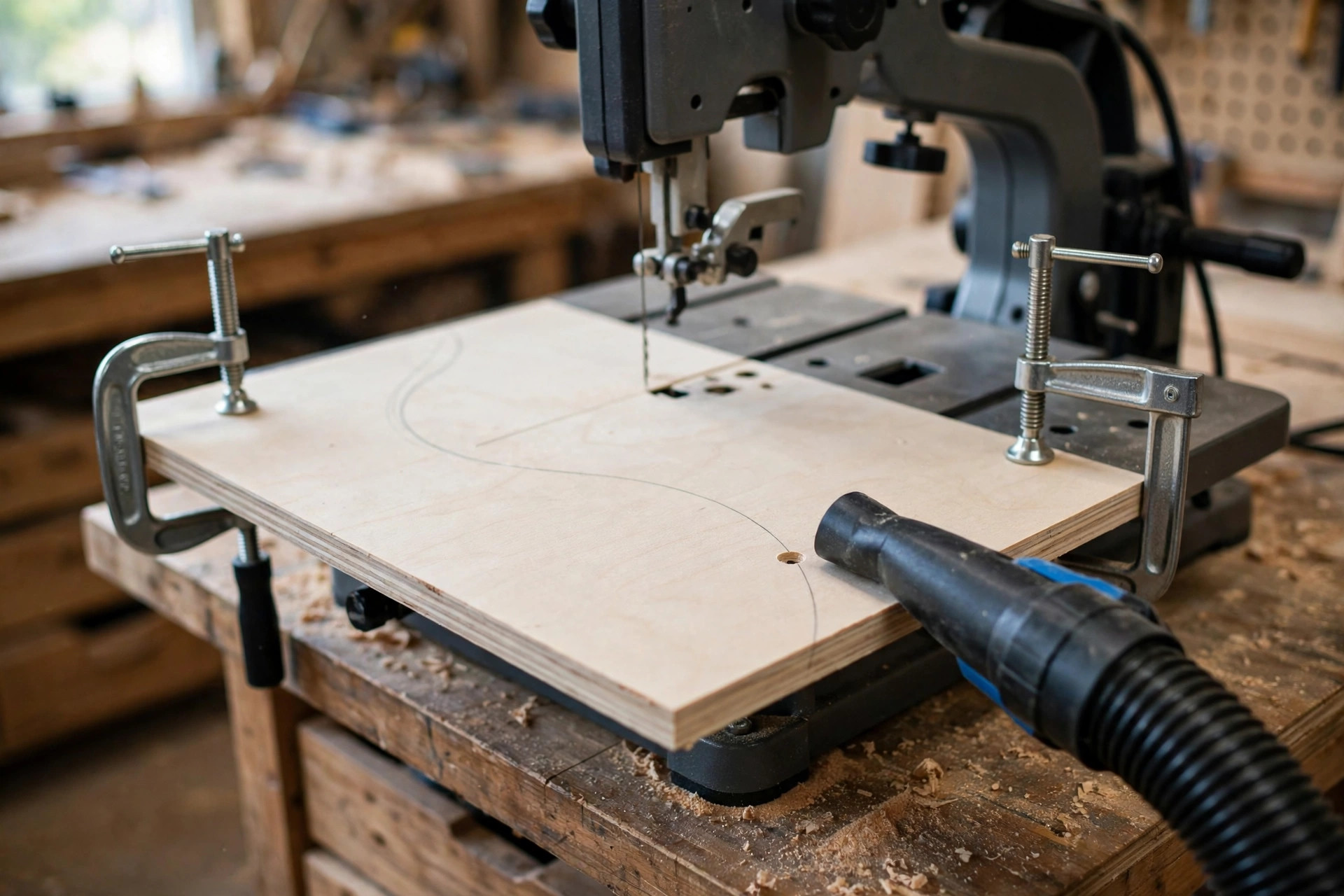
Follow this sequence for your first fretwork piece, and resist the urge to skip steps. Each one exists because beginners commonly get it wrong.
1. Choose the right wood. Start with 1/4-inch Baltic birch plywood. It is stable, has no voids, cuts cleanly, and is forgiving of beginner mistakes. Avoid construction plywood, which has voids that catch the blade, and avoid hardwood for your first piece — it is slower, harder on blades, and punishes steering errors. Buy a small pack of Baltic birch sheets and keep them for practice and gifts.
2. Pick a simple pattern and attach it well. Choose a beginner pattern with gentle curves and no inside corners tighter than your blade can turn — a simple leaf, a heart, a star, or a basic animal silhouette. Print it at full size and attach it to the wood with spray adhesive or clear packing tape over the paper, which also reduces top-face splintering. A faint or peeling pattern is the most common reason beginners drift off course, so take a minute to get this right. Good marking discipline is part of the same craft as using woodworking marking tools for beginners properly: a clear line is half the cut.
3. Drill starter holes for every interior cut. For any closed shape inside the piece — the inside of a letter, the eye of an ornament, the centre of a loop — drill a hole just inside the waste side of the line, barely larger than the blade. Thread the blade through the hole, re-clamp it, tension it, and cut from there. Never try to plunge a scroll saw blade into the middle of a board. For a first piece, pick a pattern with no more than two or three interior cuts, so you practise threading the blade without spending the whole session on it.
4. Fit and tension the blade correctly. Fit a #5 skip-tooth plain-end blade, teeth pointing downwards and forwards — the teeth should feel rough when you run a finger downwards along the blade, and smooth upwards. If the blade is upside down, it will barely cut and will overheat quickly. Tension it until it pings cleanly when plucked. This two-minute check prevents most broken blades.
5. Set the speed low and the blower on. For 1/4-inch plywood, set the speed dial to the lower third of its range and aim the dust blower at the blade. You want to see the pattern line clearly at all times. If dust builds up on the line, stop and clear it rather than guessing where the line is.
6. Feed slowly and steer with both hands. Start the saw before the blade touches the wood, ease the workpiece into the line, and then guide it forward with light, steady pressure. Do not push hard — pushing bends the thin blade, which is why cuts drift and blades snap. Your job is steering, not forcing. Keep both hands on the workpiece, fingers well clear of the blade path, and rotate the wood smoothly through curves rather than twisting the blade sideways. On a tight turn, slow the feed to almost nothing, let the blade clear, and pivot the wood gently. Think of it as driving slowly around a bend: gentle steering, constant speed, eyes a little ahead of the blade, not fixed on the teeth.
7. Finish the piece. Remove the pattern paper, sand the edges lightly with 220-grit paper wrapped around a small dowel or a folded strip for inside curves, and apply a clear finish such as Danish oil or spray lacquer. Sanding is where a rough beginner piece becomes a gift-worthy one: five minutes of careful edge sanding removes fuzz and makes fretwork look professional. Many of the small projects that sell well in our guide to easy woodworking projects for beginners that sell start exactly like this — a simple fretwork shape, cleanly sanded, finished, and priced as a handmade ornament.
Safety: The Habits That Keep Fretwork Relaxing
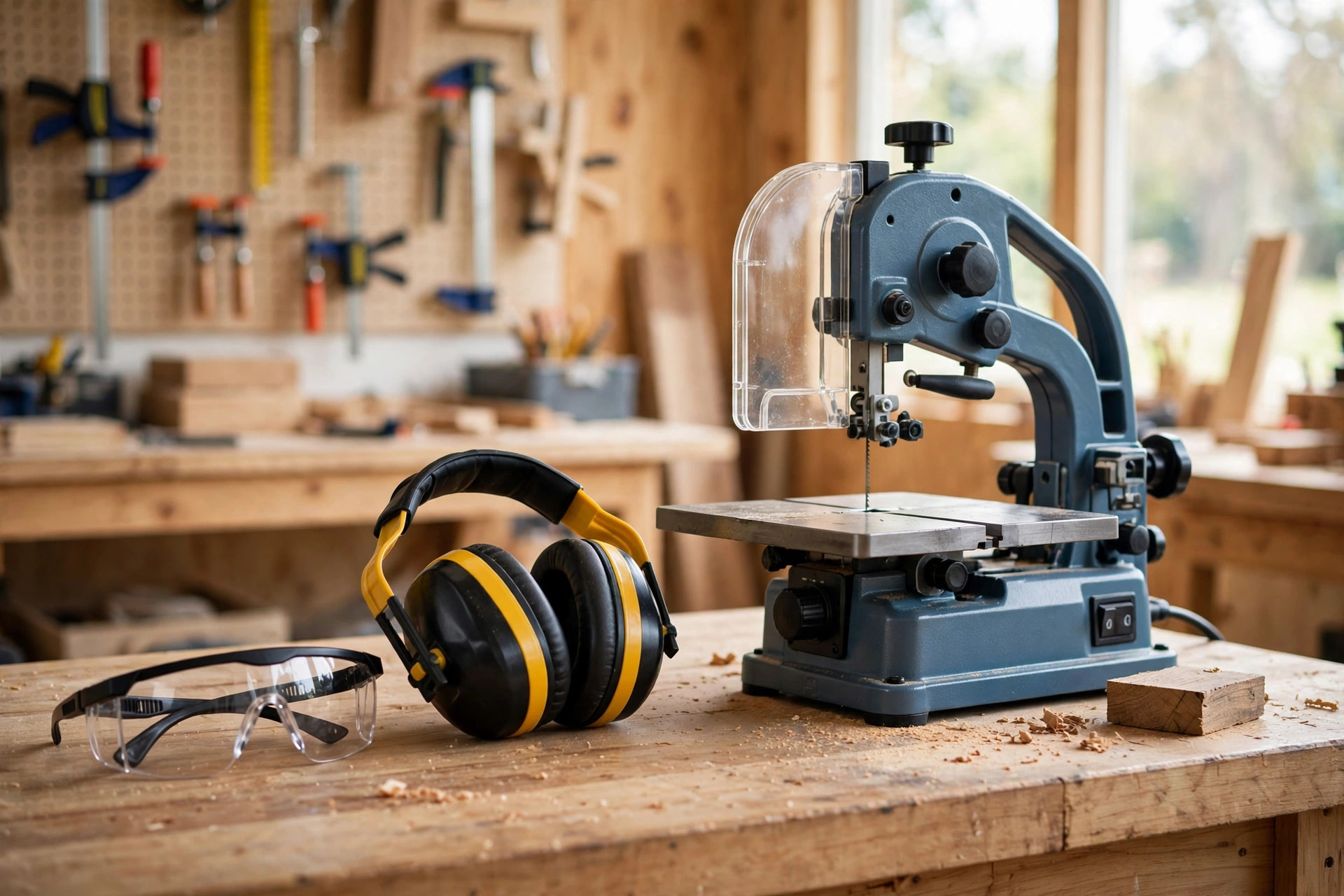
A scroll saw is one of the safest power saws to learn on, because the blade is small, the cutting action is contained, and the workpiece sits flat on a table. That safety depends on habits, not luck. Wear safety glasses always — thin blades can snap and throw a fragment, and plywood dust gets everywhere. Hearing protection is optional for short sessions, since a scroll saw is quiet, but wear it for longer cutting sessions. Keep your fingers at least a couple of inches from the blade path, and never reach across the blade to hold a small offcut. Use the hold-down foot or a small clamp to steady thin pieces rather than your fingertips near the blade.
Keep the blade guard fitted whenever your saw has one, and never cut a piece so small that your fingers must come close to the blade to hold it — cut the shape from a larger board first, then trim it down. Unplug the saw or switch it off before changing a blade, and check the blade’s direction and tension before every session. Keep the cord behind the bench, not across your work area, and keep the table clear of offcuts that could catch the blade. Finally, respect dust: fretwork in plywood and MDF creates fine dust, so work in a ventilated space and consider a dust mask for longer sessions. These habits sound basic, but they are what keep fretwork the calm, absorbing hobby it should be.
Common Beginner Mistakes (and the Fix for Each)
- Pushing too hard. The blade bends, the cut drifts, and the blade snaps. Fix: ease off, let the blade cut at its own pace, and steer rather than force.
- Under-tensioning the blade. The blade wanders and chatters. Fix: tension until it pings cleanly when plucked, and re-check tension after a few minutes of cutting.
- Fitting the blade upside down. The saw barely cuts and the blade overheats. Fix: teeth point down and forward; check with a fingertip before tensioning.
- Cutting on a loose, light bench. Vibration ruins the edge. Fix: bolt the saw down, add weight and rubber pads, and work on the heaviest bench you have.
- Using one dull blade for everything. Cuts burn, wander, and take twice as long. Fix: keep a blade set and change blades without hesitation.
- Starting with a pattern that is too complex. Tight corners and dozens of interior cuts overwhelm a first session. Fix: start with a simple silhouette with gentle curves and at most three interior cuts.
- Skipping the starter hole. Trying to plunge into the middle of a board snaps blades. Fix: drill a hole for every interior cut, thread the blade through, and cut from there.
- Ignoring the underside. A cut that looks clean on top can be splintered below. Fix: use a reverse-tooth blade for two-sided pieces, and tape the underside of the pattern line on visible work.
- Twisting the blade through tight curves. The blade snaps or gouges. Fix: slow the feed, pivot the wood gently, or switch to a finer blade.
What to Build First — and What Sells
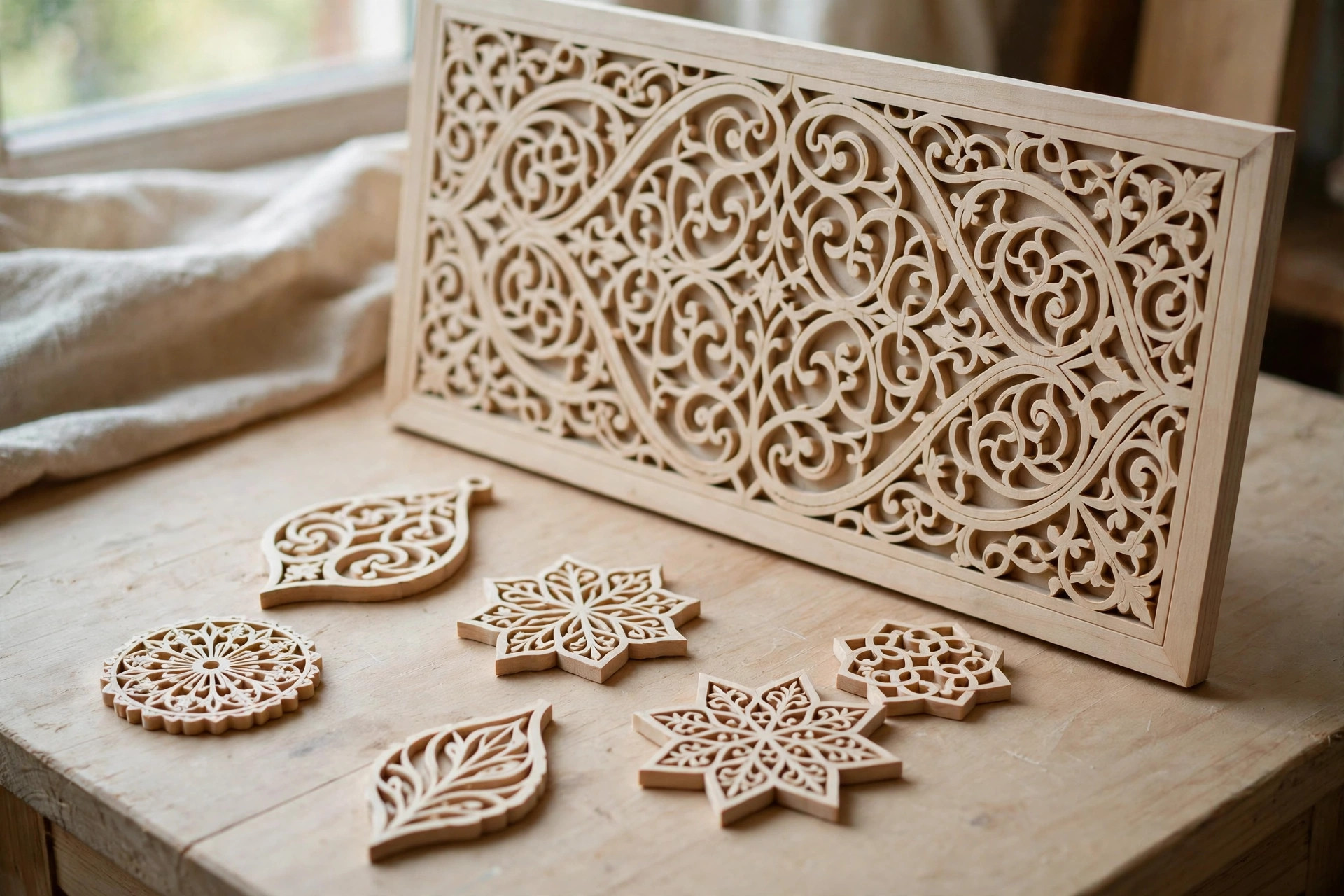
The best first scroll saw projects are ones where a fine cut is the whole point, so you practise the skill that makes the tool special. A simple wooden ornament, a name plaque, a set of puzzle-piece coasters, a small wall cross or star, or a decorative trivet all teach blade choice, steering, and edge finishing in a single afternoon. Start with 1/4-inch Baltic birch plywood, which is forgiving, and move to hardwood once your curves stay on the line without forcing.
A good progression is: first, straight and gentle curved cuts in plywood to learn speed and feed; second, a simple silhouette with one interior cut to learn blade threading; third, a small ornament with several interior cuts to learn patience and finishing; fourth, a two-layer piece, such as a fretwork panel over a contrasting back board, to learn how simple shapes become impressive gifts. By the end of that sequence you will know your saw, your blades, and your speed settings well enough to tackle almost any beginner fretwork project.
Fretwork also has a genuine selling angle that other beginner tools lack. Small ornaments, personalised plaques, and seasonal decorations are light, cheap to post, and easy to price, which is why they feature so prominently among easy woodworking projects for beginners that sell. A fretwork ornament that takes twenty minutes to cut and five minutes to finish can sell for the price of a lunch, and a personalised name sign can sell for considerably more — provided the edges are sanded clean and the finish is even. If selling is your goal, start with a small range of seasonal ornaments, photograph them well, and let the delicacy of the cutting do the marketing for you. And if you need to hold small workpieces safely while you sand or finish them, our guide to the best clamps for woodworking beginners covers the small clamps and hands-free holders that make finishing fretwork far easier.
FAQ: Best Scroll Saw for Beginners
What is the best scroll saw for beginners? For most beginners, a 16-inch variable-speed saw that accepts both pin-end and plain-end blades — such as the WEN 3921 or WEN 3922 — is the best value. If you want smoother running and plan to focus on fretwork from day one, the SKIL SS9503-00 is the upgrade worth considering.
Is a scroll saw safe for a complete beginner? Yes, with basic precautions. A scroll saw is one of the safest power saws to learn on because the blade is small, the cutting action is contained, and the workpiece sits flat on a table. Always wear safety glasses, keep your fingers clear of the blade path, use the blade guard, and switch the saw off before changing blades.
Should a beginner buy pin-end or plain-end blades? Buy a saw that accepts both if you can, start with pin-end blades for your first few practice cuts because they are easiest to fit, and move to plain-end blades as soon as you try real fretwork. Plain-end blades are thinner, turn tighter curves, and fit through the small starter holes that interior cuts need.
Why do my scroll saw blades keep breaking? Usually because of under-tensioning, pushing too hard, a blade fitted upside down, or forcing tight turns. Tension the blade until it pings cleanly, feed slowly, check the tooth direction, and pivot the wood gently on tight curves instead of twisting the blade.
How do I stop my scroll saw from vibrating? Bolt the saw firmly to a heavy bench, add rubber pads under its feet, add weight to the bench if it is light, tension the blade correctly, and slow the speed down for thin plywood. Those five fixes solve vibration for most beginners without buying a new saw.
Can a scroll saw cut thick wood? A beginner scroll saw handles wood up to about 3/4 inch thick in pine and 1/2 inch in hardwood comfortably, but it is happiest in 1/8- to 1/4-inch plywood — the thickness fretwork is made from. For thick boards and heavy curve cutting, a jigsaw or bandsaw is the better tool.
Final Verdict
The best scroll saw for beginners woodworking is not the most expensive saw, and it is not the cheapest one either. It is a solid 16-inch variable-speed saw that accepts plain-end blades, paired with a sharp #5 skip-tooth blade, bolted firmly to a heavy bench, and guided — not forced — along a clearly marked pattern line. Buy the WEN 3921 if value matters most, the WEN 3922 if easy blade changes matter most, and the SKIL SS9503-00 if smooth running matters most. Spend the money you save on a blade set and a pack of Baltic birch plywood. Then cut a simple ornament on scrap before your first real project. Your second piece will already look twice as good as your first, and by your tenth, you will have a shelf of gifts — and a quiet new hobby that fits in the corner of any workshop.